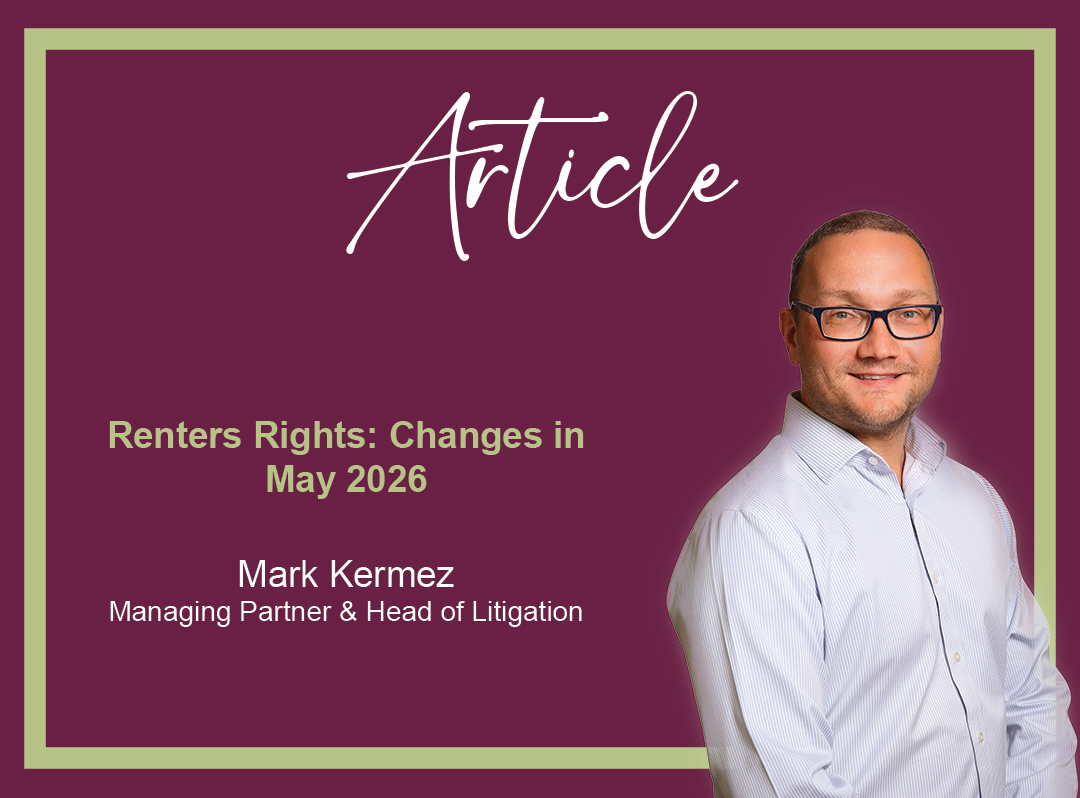
Renters Rights: Changes in May 2026
- Published:
-
Author:
Mark Kermez
-
Estimated Read Time:
6 minutes
In This Article
As the private rental market continues to evolve rapidly, and with average UK rents now exceeding £1,370 per month, tenants are facing more pressure than ever before. With the Renters’ Rights Act 2025 beginning to take effect from 1 May 2026, renters in England will see some of the most significant legal changes.
At Clapham & Collinge Solicitors, we’re here to help you understand what these changes mean and how you can protect your rights in an increasingly complex rental landscape.
Major Legal Changes Coming into Force in May 2026
The Renters’ Rights Act introduces reforms designed to rebalance the relationship between private landlords and tenants. If you live in social housing or are a lodger, then the new rules will not usually apply to you. Some of the most important changes include:
- End of Section 21 “no‑fault” evictions - Landlords will no longer be able to evict tenants without a valid reason. This is a major shift intended to provide greater security and stability.
- Rolling (periodic) tenancies become the normal - Fixed‑term Assured Shorthold Tenancies will be replaced with Assured Periodic Tenancies, meaning tenancies will continue indefinitely unless ended by either one of the parties.
- Rent increases limited to once per year - Landlords must give two months’ notice of any rent rise, and increases can only occur annually. Any increase in the rent must be no higher than the open market rent for the property.
- No more bidding wars - Landlords and agents will be prohibited from encouraging offers above the advertised rent.
- Upfront rent capped at one-month - Tenants can no longer be asked to pay several months’ rent in advance.
- Keeping a pet – Tenant will have the right to request to keep a pet. The Landlord must give reasonable consideration to these and if the Landlord refuse the Tenant’s request, they must give the Tenant the reasons why in writing. You can challenge the Landlord’s final decision in court.
These reforms aim to create a fairer, more transparent rental market for Tenants and for Landlords, they introduce a fundamental shift in both legal obligations and day-to-day management of rental properties, but navigating them can still be very challenging.
Rent Increases: What You Can and Can’t Do
Many renters feel powerless and faced with steep rent rises. Whilst the law does allow tenants to challenge increases through a tribunal, the process can be slow and, in some cases, risky. For example:
- Challenging a rent rise may lead to scrutiny that results in the tribunal increasing the rent further.
- In the past, tenants have feared retaliatory eviction, something the new Act hopes to prevent.
However, communication is key. Many landlords value long‑term, reliable tenants and may be open to negotiation. Understanding your rights and your landlord’s obligations can make these conversations more productive.
Repairs, Damp and Unsafe Conditions
Issues such as damp, mould, pet issues and structural disrepair are among the most common problems that tenants face. If your landlord refuses to act:
- You can report the issue to your local council’s environmental health team.
- Councils can issue improvement notices, which legally require landlords to carry out repairs.
- Once an improvement notice is served, tenants are protected from Section 21 eviction, though timing is crucial, as landlords may act before the notice is issued.
The law is designed to protect tenants, but the process can be daunting. Having legal support can make a significant difference.
“Awaab’s Law”
The Government has yet to confirm when “Awaab’s Law” (the duty to remedy hazards within specific timescales) will be extended to the private rental sector and we will be keeping a close eye on this.
Licensing Issues: You Could Be Owed Compensation
In some areas (particularly London) properties require specific licences. If a landlord fails to obtain the correct licence, tenants may be entitled to reclaim up to 80% of their rent for the period of resistance. Similar schemes exist across the UK, and it’s always worth checking whether your property should be licensed.
Renters’ Rights Act 2026 – Changes Coming in the Future
Other measures will be introduced in the next few years, and key dates to remember include:
- 31 May 2026 – Deadline date for Landlord’s to provide the Government Information Sheet on the changes being introduced on 1 May 2026 to their existing tenants. Landlord’s may have to pay a civil penalty if this is not done.
- Late 2026 – There will be a regional roll out of the proposed new Digital Private Rented Sector Database. Landlords will need to have active entries for themselves and each of their rental properties.
- 2027 – During this year, the Renter’s Rights Act reforms will be extended to the social rented sector.
- 2028 – A new Private Rented Sector Ombudsman will be launched, which is intended to be a redress scheme for Tenants and Landlords will be obliged to join this scheme.
Why Legal Advice Matters More Than Ever
While the Renters’ Rights Act reinforce tenant protections, the rental system remains complex. Many disputes hinge on:
- The type of tenancy agreement
- Whether notices were served correctly
- Local licensing rules
- The timing of rent increases or repairs
- Contractual clauses that may or may not still apply
However, at Clapham & Collinge, our specialist housing and property solicitors can:
- Review tenancy agreements
- Advise on rent increases and disputes
- Support tenants facing unsafe living conditions
- Assist with landlord‑tenant negotiations
- Represent clients in tribunal or court proceedings
- Help landlords understand and meet their legal obligations
Whether you're a tenant seeking clarity or a landlord guiding new legislation, we’re here to help you make informed, confident decisions.
Norwich
Tel: 01603 693500
Sheringham
Tel: 01263 823398
North Walsham
Tel: 01692 660230
enquiries@clapham-collinge.co.uk
The information in this article is for general guidance only and should not be treated as legal advice. It is not a substitute for obtaining advice tailored to your circumstances. While we aim to ensure accuracy at the time of publication, laws and guidance may change. Clapham & Collinge LLP accepts no liability for any loss arising from reliance on this content. For personalised advice, please contact our client relations team to book an appointment.nt.