Why a DIY Will or Using an Online Will Writing Service Could Become Your Most Expensive Mistake
- Published:
-
Author:
Lin Whitehead
-
Estimated Read Time:
5 minutes
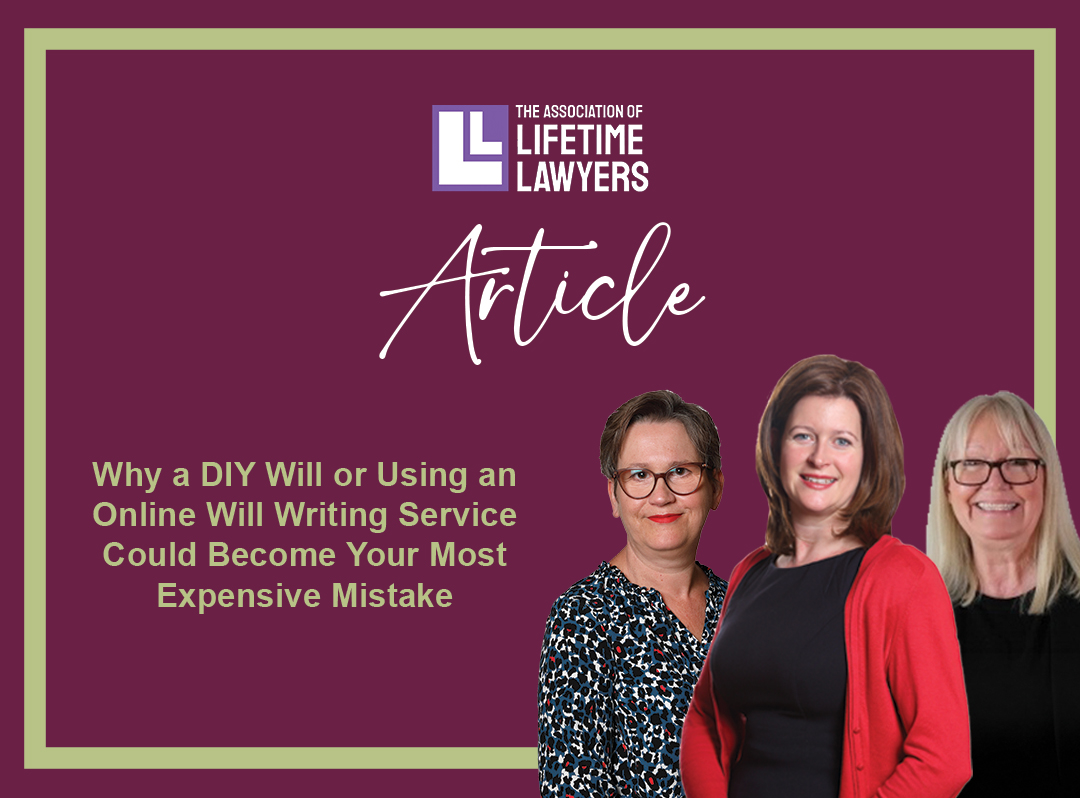
For many people, writing a will online or using a DIY template seems like a sensible way to save money. With online services advertising free or cheap wills, it is easy to see the appeal.
However, what appears to be a cheap and simple solution can often create significant unintended problems for the people left behind. As a members of The Association of Lifetime Lawyers, Lin Whitehead, Jenny Alexander and Wenche Lie-Critchley are regularly encountered situations where a poorly drafted DIY will has led to family disputes, delays, and unintended consequences that far outweigh the cost of obtaining proper regulated advice in the first place.
Unfortunately, a will cannot be corrected once someone has died, so by the time any mistakes come to light, it is usually too late.
Invalid wills
One of the biggest risks with DIY wills is that they may not be legally valid.
Common mistakes that would invalidate a will include:
· Using beneficiaries or their spouses as witnesses
· Failing to sign the will correctly
· Making handwritten amendments after signing
· Relying on templates that do not properly reflect legal requirements
If a will is found to be invalid, the estate may instead pass under the rules of intestacy rather than according to the deceased’s wishes. This can have devastating consequences for families, particularly where there are unmarried partners, stepchildren, or estranged relatives involved.
Ambiguous wording creates disputes
DIY wills can unintentionally contain vague or overly simplistic wording. Phrases such as “my savings”, “my possessions”, or “divide everything equally” can create uncertainty and disagreement between beneficiaries.
What exactly counts as “savings”? Does this include investments? Joint accounts? Premium Bonds?
Unclear wording can lead to disputes between family members and, in some cases, costly litigation. Families can spend thousands of pounds trying to resolve issues that could have been avoided through careful drafting and professional advice.
Blended families and modern relationships
Modern family structures are increasingly complex, yet many DIY will templates fail to account for this.
Second marriages, cohabiting couples, children from previous relationships, estranged family members, and vulnerable beneficiaries all require careful consideration. A simple “leave everything to my spouse” approach may unintentionally disinherit children from an earlier relationship or fail to protect assets for future generations.
Many cohabiting couples wrongly assume that living together automatically gives them the same inheritance rights as married couples or civil partners. In reality, legal protections for unmarried partners are often limited and can vary across the UK.
Verbal promises and informal understandings are rarely enough to resolve disputes after death.
Online templates cannot reflect individual circumstances
Most DIY wills and low-cost online services are designed to be generic. The problem is that very few estates are truly “simple”. Important issues can easily be overlooked, including:
· Inheritance tax exposure
· Business assets
· Digital assets and online accounts
· Foreign property
· Vulnerable beneficiaries
· Unmarried partners
· Trusts and asset protection
Property values, pensions, and changing tax rules mean that many people underestimate the complexity of their estate and the potential consequences of getting things wrong.
The real cost of a “cheap” will
People often compare the upfront cost of a DIY will template or online service with the fee for professional advice. However, the real comparison should be between spending a few hundred pounds now or risking a far more expensive probate dispute later. The cost of fixing problems caused by a badly drafted will is almost always significantly greater than the cost of preparing a professionally drafted one in the first place.
For many families, the financial cost of sorting out a DIY will be only part of the issue; delays, uncertainty, and family conflict can place enormous emotional strain on loved ones at an already difficult time.
The reality is that simple estates are increasingly rare. Property ownership, pensions, blended families, digital assets, and tax considerations all add layers of complexity that DIY and online solutions often fail to address.
What may seem like a cheap option today can ultimately become one of the most expensive mistakes a family will have to face later.
Consulting an Accredited Lifetime Lawyer about your individual circumstances can provide reassurance that your wishes are clearly documented and help avoid conflict, uncertainty and unnecessary costs for your loved ones in the future.
Contact Lin Whitehead, Jenny Alexander or Wenche Lie-Critchley at Clapham & Collinge Solicitors on 01603 693510 or email: enquiries@clapham-collinge.co.uk
Norwich
Tel: 01603 693500
Sheringham
Tel: 01263 823398
North Walsham
Tel: 01692 660230
enquiries@clapham-collinge.co.uk
The information in this article is for general guidance only and should not be treated as legal advice. It is not a substitute for obtaining advice tailored to your circumstances. While we aim to ensure accuracy at the time of publication, laws and guidance may change. Clapham & Collinge LLP accepts no liability for any loss arising from reliance on this content. For personalised advice, please contact our client relations team to book an appointment.